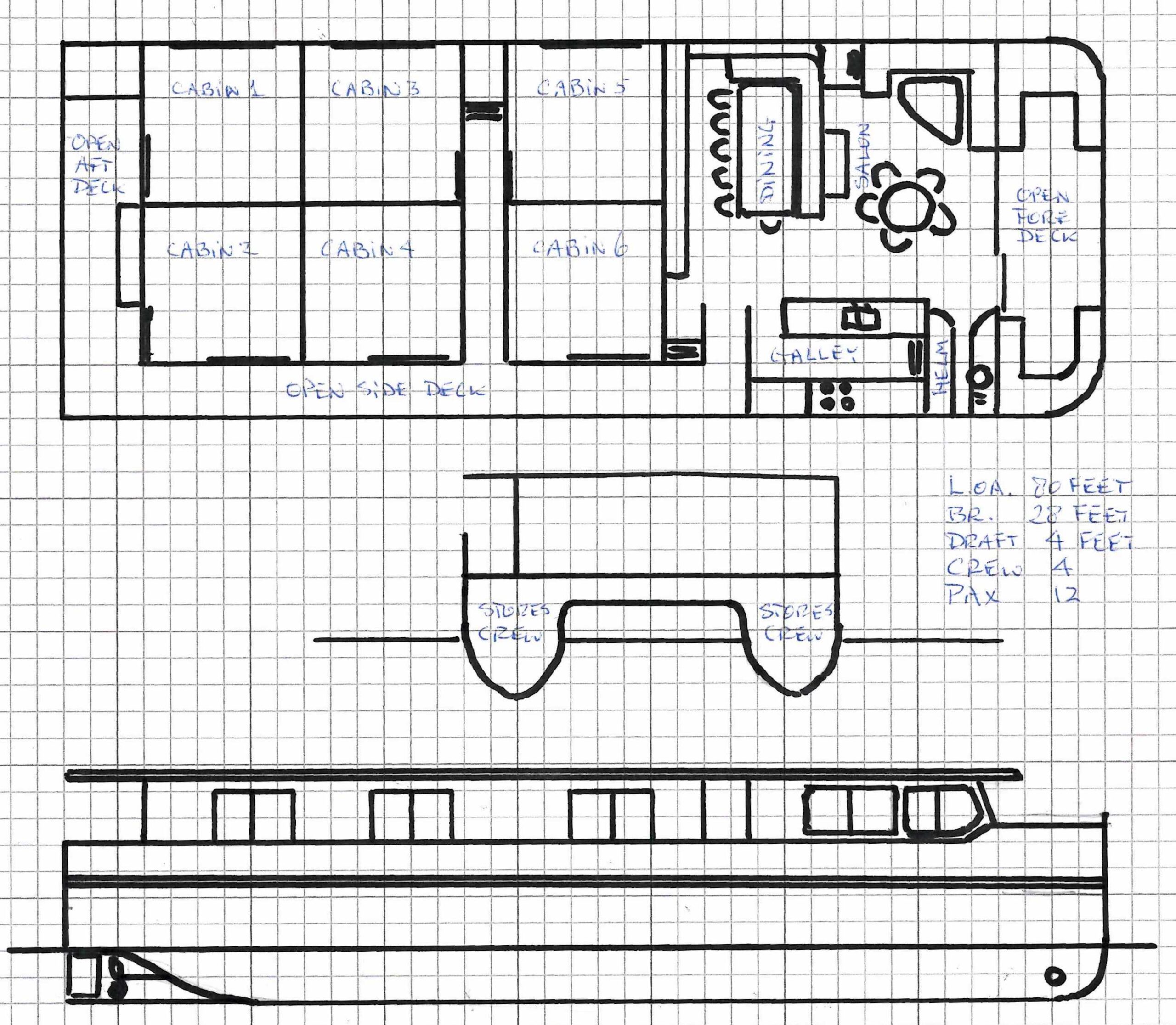
Aberration has returned from a three week cruise on the Erie canal. It has been an unforgettable adventure and I am still suffering from a stimulation and information overload.
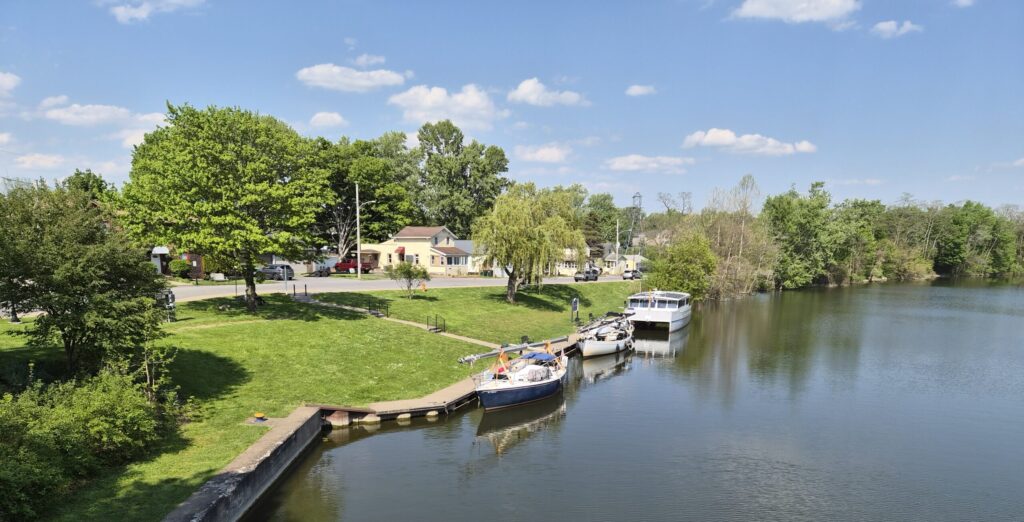
There were so many impressions that I will list them as paragraphs and hopefully it will provide a rational basis for my primary suggestion at the end of the list.
1. Running the canal is fun and when you are not in a hurry is a special type of joyful exploration.
2. The canal provides a special type of peace and relaxation that is hard to imagine in America.
3. There is wildlife everywhere and most of the canal system surroundings are gorgeous.
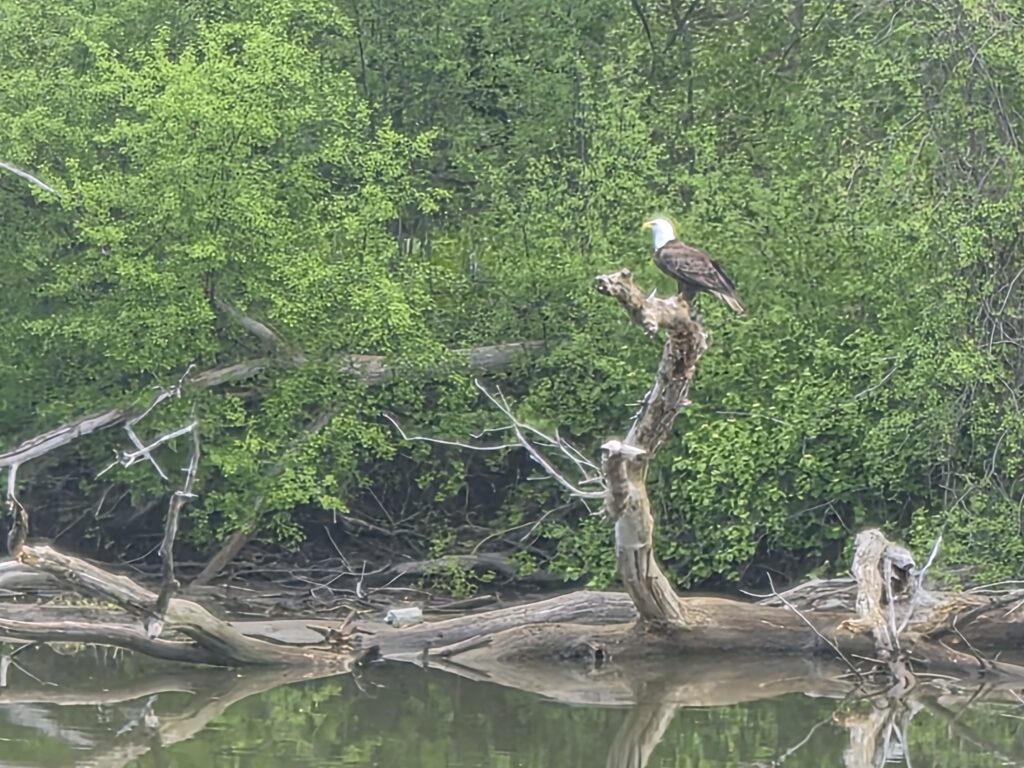
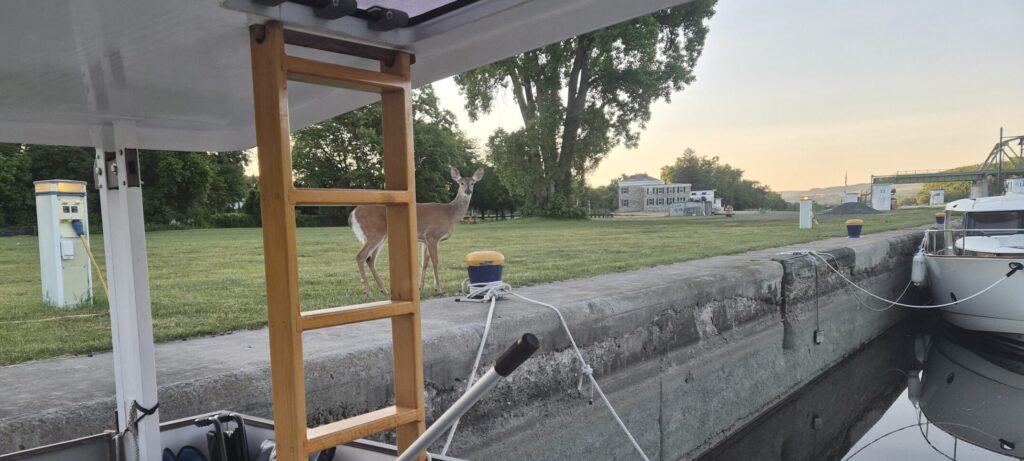
4. Overall, the people on the canal are friendly, cooperative and courteous, marred by an occasionally powerboater who refuses to obey the speed limits. Having said that, it is easy to monitor speeds on the canal, because there are minimum times between locks and if a boat exceeds the speed limit they will arrive at the next lock too early. Occasionally lock keepers will punish speeders by simply making them wait to conform to a schedule.
5. The speed limits are a technical requirement. The speed limits are actually vessel wake limits and excessive vessel wakes are extremely damaging to the canal structures and very much add to the maintenance cost.
6. There are many Canadian boats on the canal, and their courteousness is infectious. Listening to a Canadian boater on the VHF first apologizing to the lock keeper and then gently asking why the lock has not opened in the last 30 minutes adds so much class.
7. The New York canal system is big. Really big. It takes about 10 days to go from the eastern end (Waterford) to the western end (Buffalo)
8. But that is only the tip of the iceberg. There are side canals that connect even more places than just New York City to Lake Erie. Oneida Lake, Onondaga Lake, Senaca Lake, Cayuga Lake, Lake Ontario, Lake Champlain and the St. Lawrence seaway all are interconnected by the overall system. I estimate it is possible to spend an entire summer cruising the canal and still not scratch the surface.
9. Every lock is actually a little public park. People wave, people chat, people fish, people picnic, kids come to play.
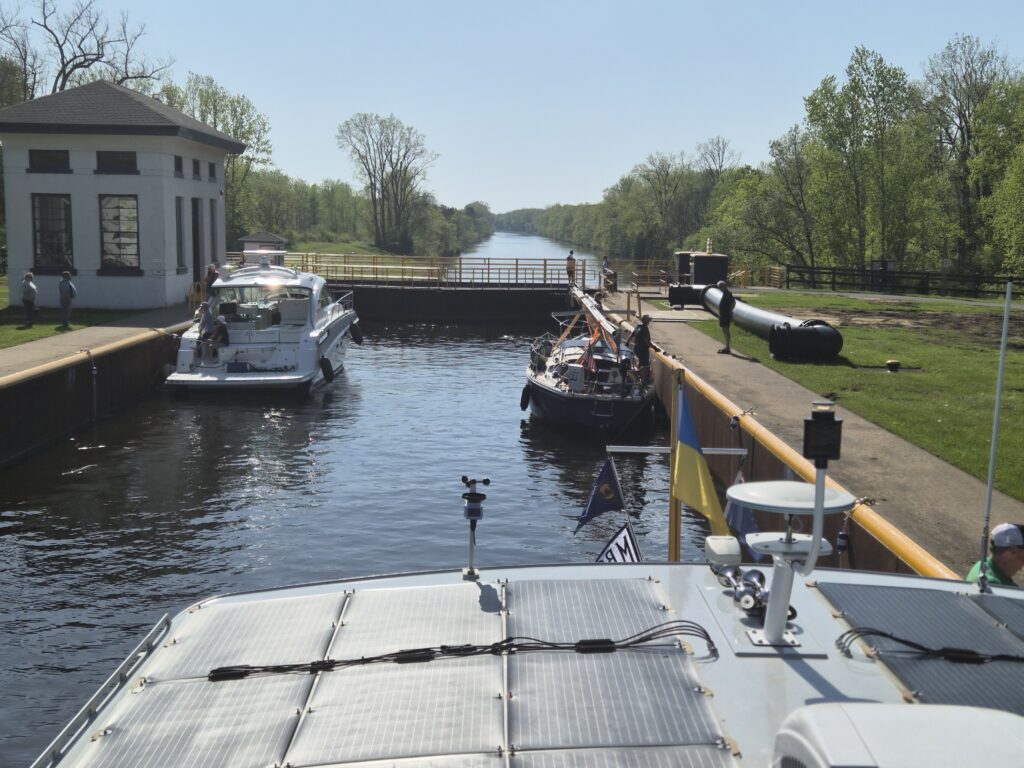
10. The canal system is multi-use. Hikers, birders, runners, walkers, bikers, kayakers, fishers, boaters, automobile and motorcycle tourists all interconnect.
11. Towns have collapsed with the loss of the canal driven industrial base. Almost all towns near the canal have experienced this, and many have not recovered. But many others are recovering and some are now little gems. Medina, Little Falls, Waterford, Scotia (with access to the Schenectady Stockade), Lyons, St. Johnsville, and Baldwinsville stand out as truly neat places to visit (there are many more; I only was on the canal for three weeks), and many more have huge potential if the canal becomes a bigger attractor.
12. Some locations suffer from poor access. Syracuse has a beautiful harbor that was built this century but is falling apart due to lack of maintenance. It just never became the attraction it was thought to be. One reason is that access to the harbor is restricted due to a lack of air draft of a single railroad bridge leading into the harbor. The nominal air draft for the canal is 15.5 feet but the bridge leading to Syracuse harbor is only 14.5 feet. The restricted airdraft has restricted traffic to the harbor, which has made dredging less needed and now the channel depth is only 5 feet.
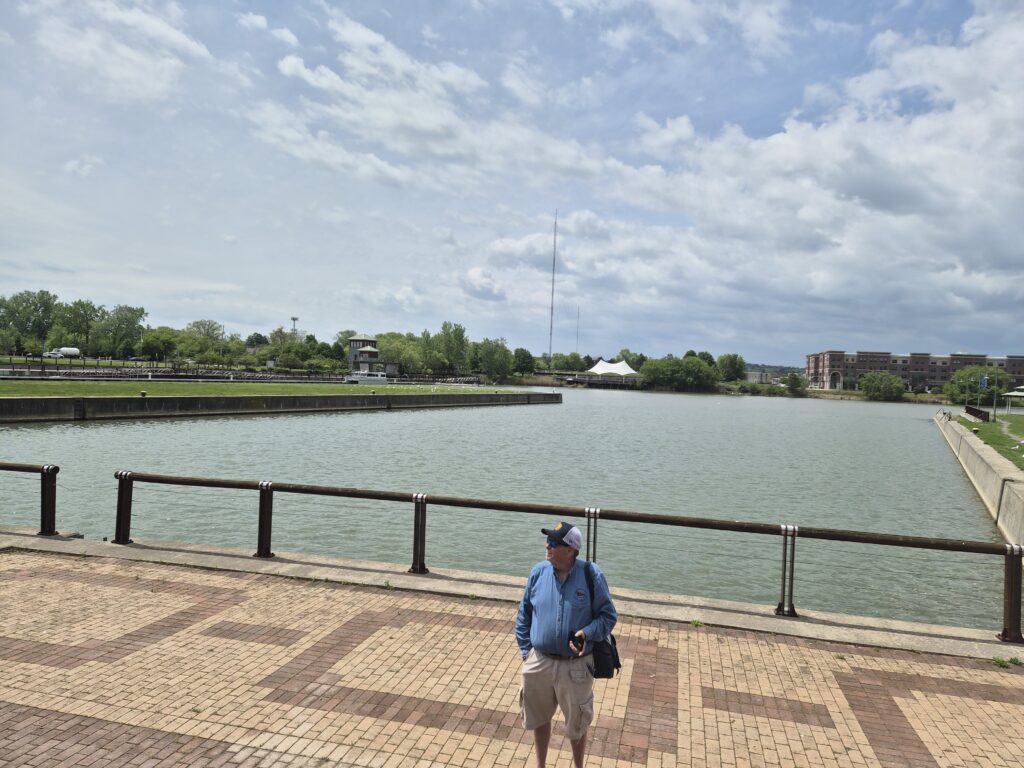
13. Lake Onondaga is between the Erie canal and Syracuse harbor. At one time it was one of the most polluted lakes in the United States. It has undergone a major clean up effort, but even local residents still incorrectly consider it to be dangerously polluted.
14. There have been various efforts at increasing canal facilities in towns, some are incredibly well done and others are failures. Some are almost hidden. The main Amsterdam waterfront is a technical and social failure. Meanwhile, there is a simple dock wall at the western edge of Amsterdam that is a great spot to tie up next to a great restaurant (Russo’s).
15. What is really fun is that waterborne canal exploration can be extremely low cost by stopping at public tie up points, or optionally more comfortable by using marinas.
16. The canal is FREE! No tolls!
17. The canal is a paragon of sustainability. The lock’s electrical service is hydro powered and the canal itself is sustained by nothing more than rainfall. The low speeds result in very little CO2 generation. The electric infrastructure can be expanded to facilitate zero carbon boating.
18. There have been various tentative efforts of exploring and testing electric propulsion for canal vessels. However, there is no continuous strategic project to fully establish electric propulsion along the canal. Various experiments occurred and then were simply put ashore because there was no systematic approach to make electrification succeed. Meanwhile, the canal is an obvious first adopter for electric propulsion because it is low speed with many stops (locks) for recharging.
19. Generally, the canal is quiet, except for the canal’s mortal enemy; railroads. Major railroads follow the level canals and are, by far, the biggest noise polluters. They are kinda fun too. Counting railroad cars on the Canal is better than counting cars on the Turnpike. My boat has a loud whistle and some train engineers will whistle back to great enjoyment of all around.
20. The lock keepers really try to make it all fun and help whenever they can, despite their rather difficult (often seasonal) employment conditions.
21. Many if not most of the lock keepers have never traveled the canal and, as such, know their lock but not the canal.
22. The Canal Authority really wants the canal to become a massive success, and the economic lead for this massive part of New York State.
23. The canal is very expensive to maintain, even to a level where it is difficult to substantiate the cost. Maintenance is committed to keep the canal functional, but also minimal at the strategic level.
24. There actually have been discussions in the past at shutting down the canal due to the cost to maintain it. That is a horrendous prospect and will be an economic death knell to huge swaths of New York State.
25. The canal requires continual dredging and during this spring’s trip there were various sections where the water depth was only 5 feet.
26. Like all maritime infrastructure the positive effect of the canal system is hard to measure. Obviously, marinas benefit from canal traffic, but a healthy canal has typical maritime infrastructure economic multipliers. Back when the first ditch was dug, people expected it to expand New York City’s power, but nobody expected how and how much it would expand its power. The trick is to configure the canal to a new economic attractor in the form of the main artery of a massive US Northeast Park.
27. Focusing on continuous growth especially in tourism and recreation is the game, but commerce and even commercial canal transportation still can add value.
28. Micro cargo, especially in the form of farm to table and wine transportation, will not inherently be incredibly profitable, but will grow canal awareness and tourism interest.
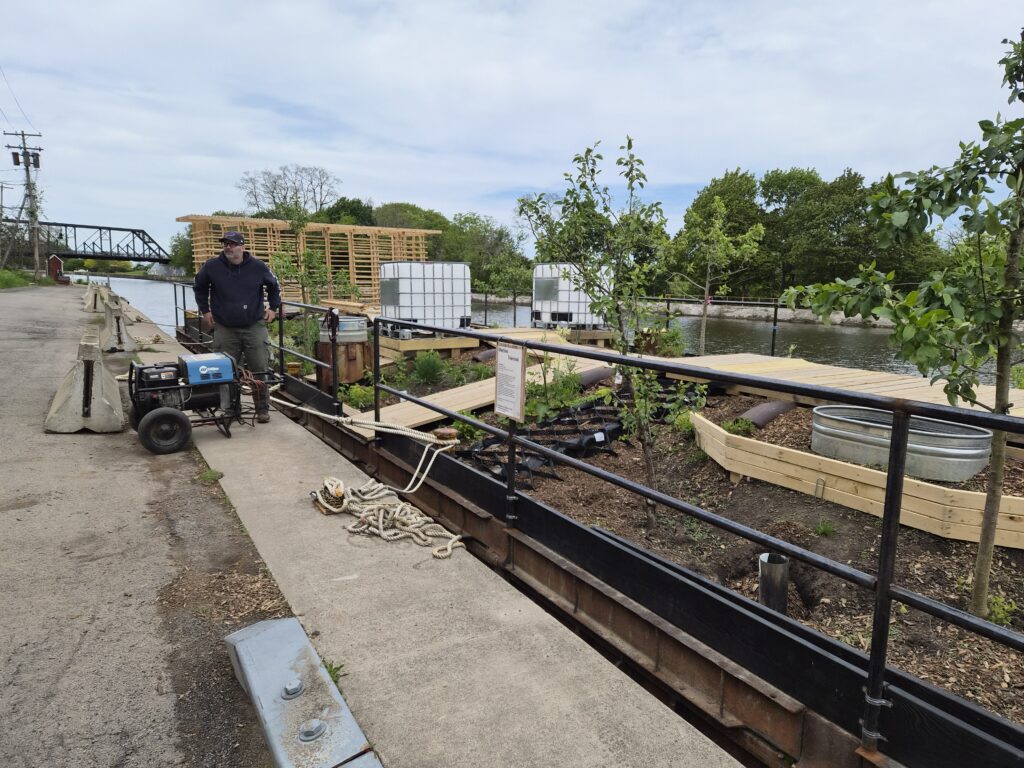
29. Art plays a role along the canal. Medina has a triannual canal festival, but it is mostly restricted to Medina and does not extend along the canal. Mary Mattingly designed a floating food forest for Medina, the forest is on a barge that can be moved from town to town. It would make sense for Canal Authority tugs to move the barge from town to town on an opportunity basis, but this arrangement has been difficult to establish due to extreme fragmentation of canal operations.
30. Operational and user information for the canal is also extremely fragmented. Cruising vessels rely on the Skipper Bob Canal Guide. It is helpful but incomplete. Meanwhile New York State Canalways produces the Water Trail guide book. This guide was produced for paddlers and is incredibly complete and comes with detailed maps but is not made available to the sailboat and powerboat cruisers and is very poorly promoted to them.
31. This support for paddlers frustrated commercial marina owners who regard paddlers as commercially insignificant while receiving more public support than cruising boats. This is not a strategic approach, noting that happy paddlers may graduate to become happy cruisers or entice cruisers they meet to explore the canals.
32. It makes much more sense to publish one exhaustive guide that caters to cruisers and paddlers alike and only requires updates of one central guide.
33. Keeping guides up to date is hard work and expensive. On my trip I encountered various guide entries that were no longer accurate. It makes much more sense to publish one exhaustive guide that caters to cruisers and paddlers alike and only requires updates of one central guide.
34. The canal authority has developed a canal app that provides notices about canal operation interruptions and restrictions. This app may make sense from the operator’s point of view, but is completely impractical from the user’s side. It needs a complete redesign.
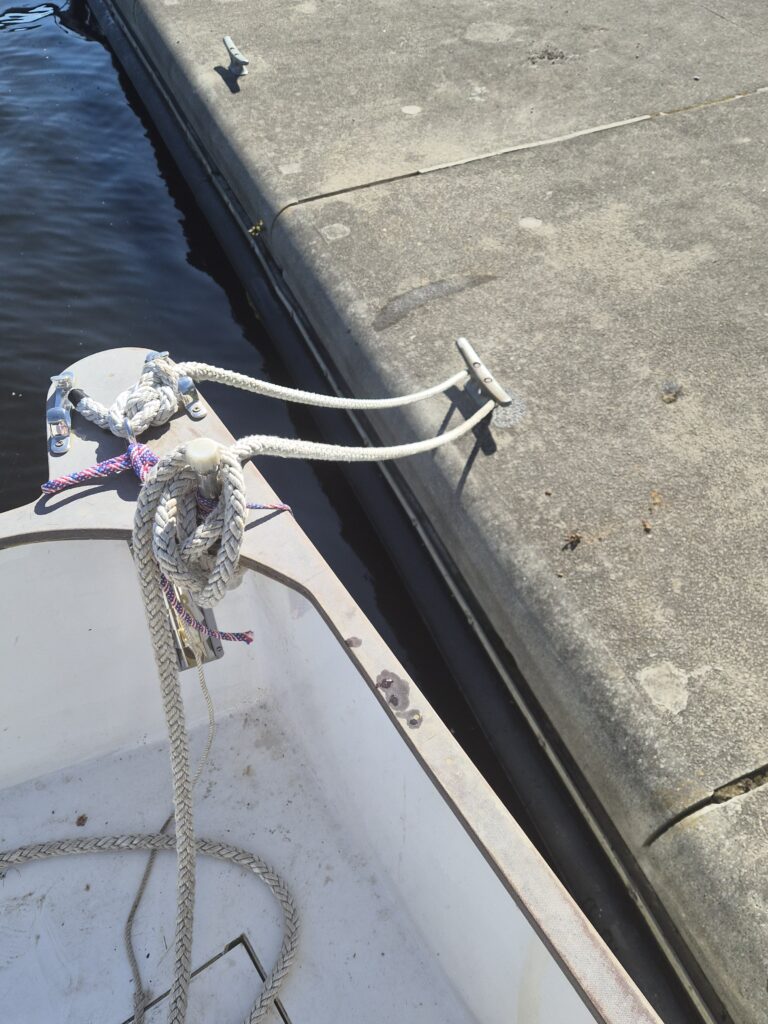
35. At the operational level there is great variation in the human factors operation from lock to lock. Some locks have shore power and great lock securing methods while others have hand ropes with large drops that make it difficult to keep a boat in place when the lock fills or empties. Some tie ups (marinas, town docks and locks) have lovely cleats that allow a single hander to lasso the cleat, while others have tiny cleats or mooring rings that require the boater to go ashore to secure her boat.
36. To operate a successful canal system, there needs to be tight coordination between the canal authority, commercial stake holders and canal users. The canal will become more attractive when predictability increases and that can only occur when there is tight coordination between stake holders.
37. While undoubtedly there can be environmental conditions that restrict canal operations, there are also operational restrictions that relate to maintenance issues. Often the boater is left to wonder how long they will be held at one side of a lock. During my cruise I spent 4 days stopped west bound at Baldwinsville due to undefined high water issues and then again 5 days stopped east bound on my return trip with the same explanation. These may have been environmental conditions, but from the cruiser’s side it is easier to make plans (like a rental car excursion to Watkins Glen) if there is a clear explanation as to why high water is restricting operations (we could not think of any) and what the best estimate for reopening of the canal is.
38. It is remarkable how much knowledge and insight exists along the canal. Being delayed for many days resulted in lengthy conversations with canal stake holders who had excellent insights and concerns that needed to be addressed. Continuous and deep contact between canal authorities and stakeholders is vital.
39.Holding tank pump outs are mostly maintained by marinas, and occasionally town docks. Too often those pump outs are not operational or out of reach when there are canal operational restrictions.
40. After we entered the canal on May 15, there were various town facilities that had not opened yet. Cruisers know how to improvise, some unpredictability is to be expected, but there are levels of unpredictability where cruisers will condemn the entire system.
41. There are unexpected beneficial interactions between recreational use and commercial use of the canal (Martin & Ottaway occasionally is involved in special cargo moves along the canal). Until not too long ago a cement barge used to deliver cargo up and down the canal. This larger barge with greater draft would push through silt piles and help maintain water depths.
42. Slow with low CO is a special win/win sustainability category that warrants deeper exploration and the canal is the prime example of such a category.
43. The NY canal system is an integral part of a much larger US and Canadian canal system that is often described as the Great Loop, but actually is a massive collection of many loops. The NY Canal System has the potential to be become the star of that larger system, if there is a concerted effort to make simple improvements every day and to stick with a larger strategic plan that makes more complex improvements and enhancements.
44. A primary obstacle in achieving greater recognition of the canal and the greater NY state blue byways as an incredibly attractive recreational and tourism resource is a lack of general awareness of the entire system.
I will stop here. There were many other issues to ponder and in spending time on the canal running Aberration in peace and quiet one can let one’s mind wander. One considers the boat, one considers the canal, one considers the larger picture and then new crazy ideas bubble up.
A canal like this needs constant attention. Aberration received a lot of attention. A super low emission quiet low wake wheelchair accessible canal cruiser draws attention.

Traditionally a marine infrastructure project always had a Supervisor’s yacht. Especially in the promotional period of a marine infrastructure project such a yacht helped develop the commercial viability of the project.
Once the project had achieved full viability, there would be a shift to profitability, and generally when the Supervisor’s yacht started to age it was retired and not replaced with a new boat.
The present canal system is in need of promotion and it occurs to me that what the canal needs is a flagship, a promotional vessel that explains the wonders of the canal and at the same time serves as an inspection and testing vessel of the system, and covers the larger NY Blue Byway system extending from Raritan Bay to the Canadian border north of Lake Champlain to Buffalo and the Finger Lakes and even the Thousand Islands.
In those moments I started to think in terms of an enlarged version of Aberration.
This is what I sketched up quickly.
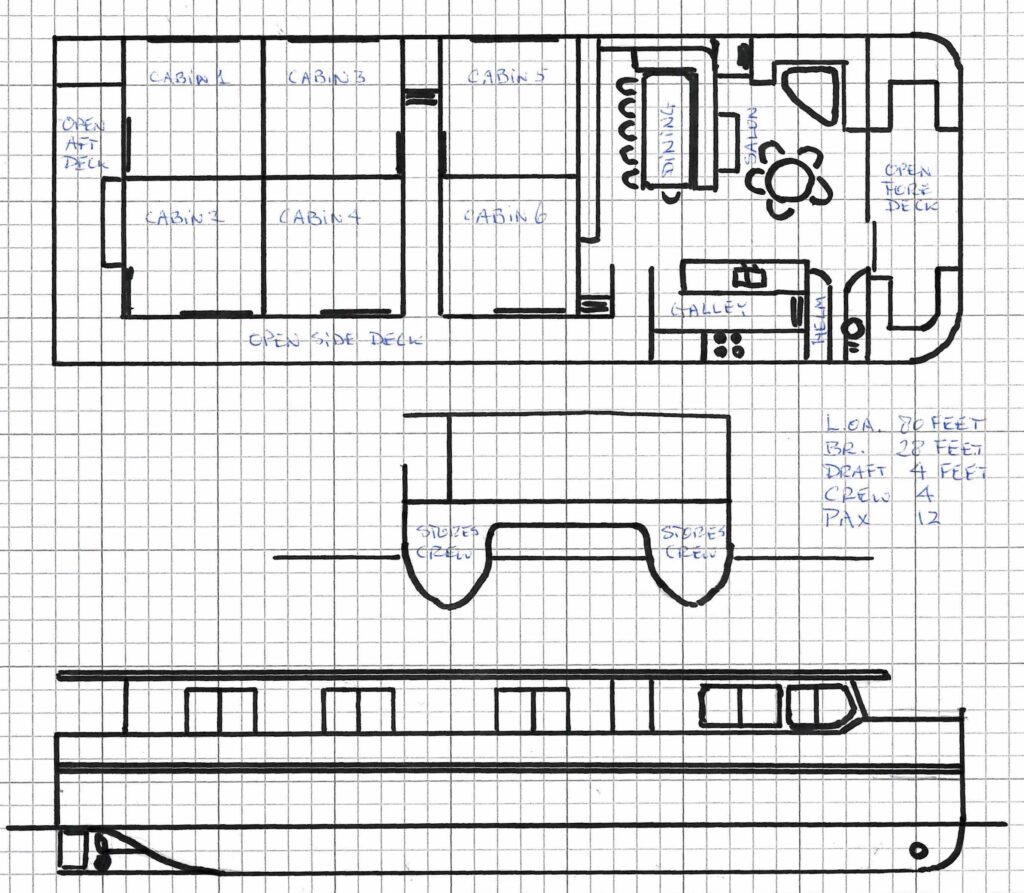
It is dimensioned to provide a real presence on the canals and also New York Harbor, but does not overpower it either. It just blends in and can visit every part of the NY Blue Byways system while still providing exceptional comfort.
Like Aberration, it will have a standby generator (running on biodiesel) for long runs, but the solar and battery system can cover even more than the system on Aberration since scaling up a vessel allows more efficient propulsion.
She will run very efficiently at 9 knots and can make 12 knots if needed but losses range at that speed.
Like Aberration she produces an extremely low wake and will be whisper quiet.
Since the NY Power Authority runs the canals, electric propulsion is a great promoter.
In a function like this, the vessel co-operates with a support van.
This is a dedicated van (preferably electric) that can swap out passengers and move passengers between shore side facilities and events and visits further inland, and provide supplies as needed, including locally farm to table produced food and drink.
The layout shows six nice guest cabins. That is pretty arbitrary, and will depend on the actual promotional program.
In fit out the vessel will be nice, but not ostentatious. The vessel’s use and technology are its calling card, not glamour. Glamour exists in the events, scenery and visits that occur outside the vessel.
As far as programming goes, I can think of the following activities:
1. Governor’s barge. There are times when water borne transport for the Governor and guests is more appropriate and impactful when it occurs on the water.
2. Economic development. Foreign and out of state guests of the government can tour relevant sections of the canal for inspiration.
3. Government and superintendent attendance at canal events.
4. Promotional vessel for NYPA with regard to sustainable energy and electrification.
5. Test and inspection vessel for electrification efforts and facilities along the NY waterways.
6. State vessel for organizations such as make a wish foundation, veterans organizations, etc.
7. Media promotion through Anthony Bourdain style documentary segments as the vessel tours the New York State Blue Byways.
8. Host vessel for canal and New York’s Blue Byway stakeholder conferences.
9. Very high-end cruise vessel trade if needed for financial reasons.
10. Similar to the Pride of Baltimore the vessel can also go on more extended promotional cruises as a goodwill ambassador to other states and to Canada.
A vessel like this is not a minor investment, but I certainly think it will be the most cost-effective approach for the promotion of all the aspects of New York State’s incredibly large and versatile waterways.
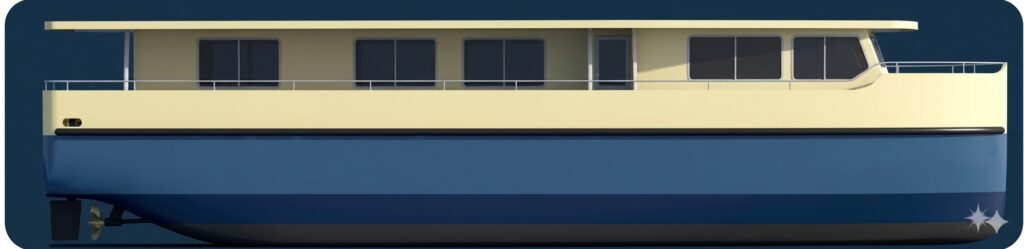
A quicky generated Gemini AI image using the design sketch.