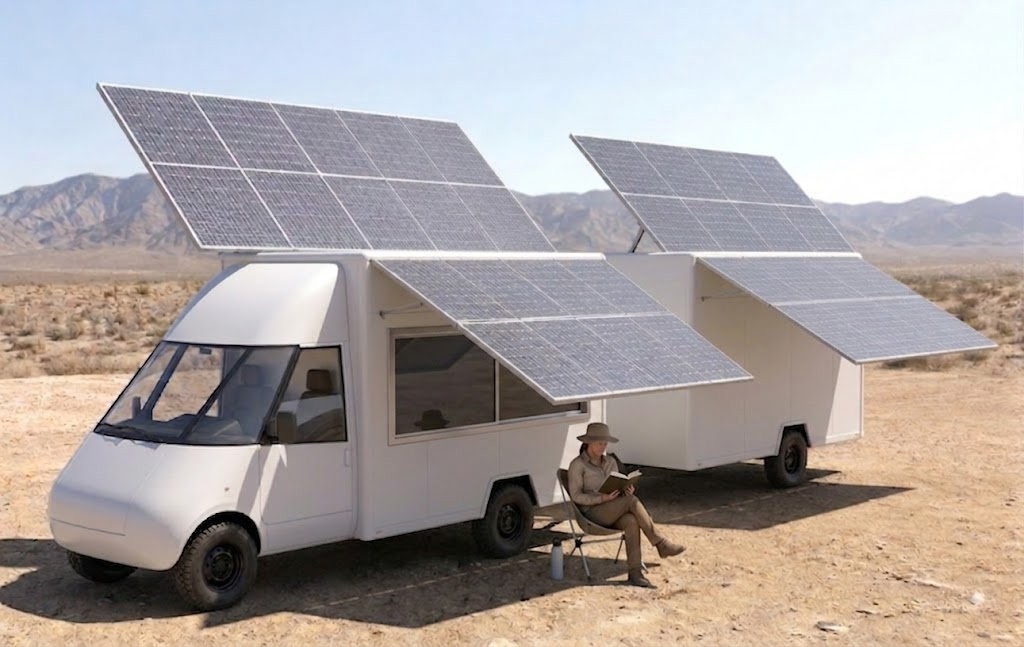
In 2013 I ruminated on a solar powered RV that could cross the United States using natural resources not unlike the way settlers did it with their oxen drawn Conestoga covered wagons. Although in a little more comfort.
Now 13 years later, technology has improved and my desire to some day build one of these continues. It is fun to read old blogs. For one thing, in 2013 I apparently did not take into account that EV’s and EV charging networks would pretty much take hydrogen powered cars off the table. I also never even considered methanol as a fuel, while today I would call it the prime e-fuel .
Today EV cross country driving is not a big deal. However, crossing the country completely under own power is still a fun and noble pursuit. Especially when it is slow, which is where I find the real joy lies.
I still like the original concept.
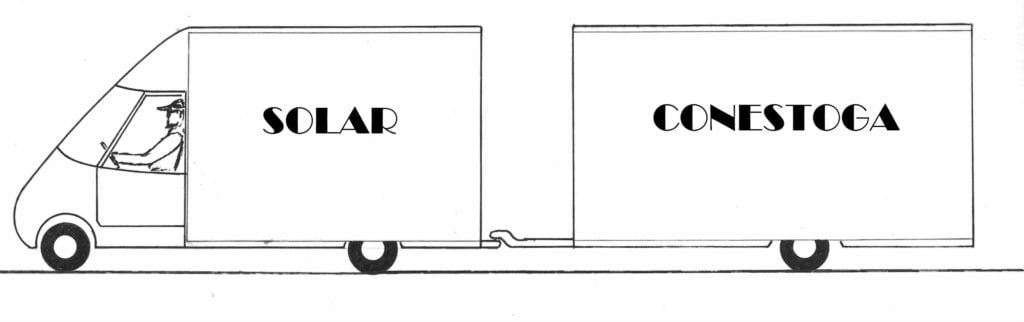


It was originally designed as a Maxi Taxi concept and therefore was restricted to a five foot width. I would still keep it at that width, mostly because it would allow faster traffic to easily pass me on country roads and there is honor and grace in designing the smallest thing that can do the job.
Although at the time I thought of it as a project for my wife Anne and I, that is no longer possible. Meanwhile, there have been many people who have told me they would love to run a Solar Conestoga themselves, and I may do it on a solo run myself. I often take solo back road trips during my business travels on weird projects and it always feels great; like a cowboy riding into town on a dusty horse.
There is a slightly different version of this concept looming on the commercial horizon in the form of the Aptera concept. This is a tiny three wheeler, and only has 700 watts of solar panels that cannot be angled. It can make only 40 miles per day on solar alone, but actually comes with a tiny camping attachment.
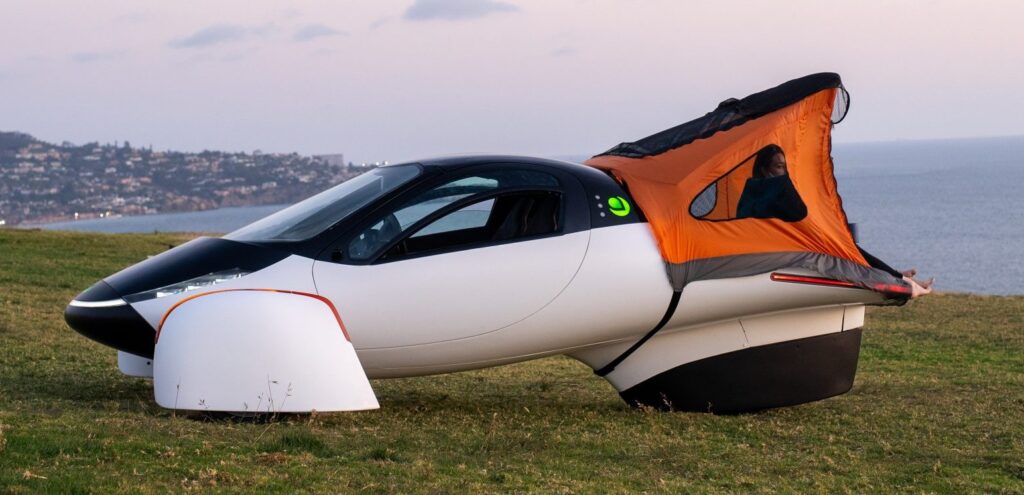
It is just a different approach, but let’s say it is more of a single horse cross country trip than a stagecoach cross country trip. Having said that, I really like the concept as an around town car. I hope it succeeds. I can see myself in one for that purpose.
The fun part in the passing years is the march of technology (and me becoming smarter through it).
I am now more familiar with electric drive issues and while the Nissan Leaf drive package can actually be commercially purchased, I am no longer certain it is the best solution. I think I can keep it simpler (and therefore more reliable) if I use the same Victron battery and solar equipment that I use on Aberration and believe I can achieve the same drive train weight. It will be a lower voltage system which will require more wiring weight, but there is not that much high power wiring anyway. Basically just from the batteries to the motors, where the motors, relatively speaking, will be heavier but I don’t need big motors anyway.
What I really will enjoy is the Victron battery management system which will be a joy to use on the road. It is simple and rugged, with excellent trouble shooting features.
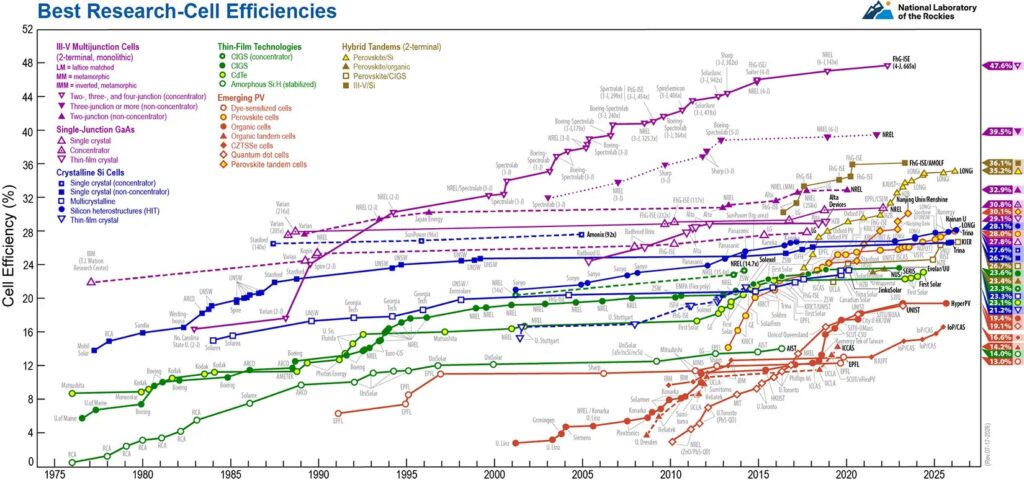
The chart is hard to read, but in thin film between 2013 and 2026 I can expect efficiencies to have gone up from 20% to 25%, which by itself is a 25% increase in solar energy production.
The 2013 design had a range of a little more than 100 miles and used a 24 kWh battery pack.
Today I would fit 40 kWh batteries at the same weight and get 125 mile range, and more on the road charge too. I might even sneak in an air conditioner to cool the bedroom down on hot nights. With panels deployed, there is plenty through ventilation through the screens beneath the panels. However, on muggy nights just reducing the relative humidity in the sleeping cabin makes a huge difference. To sleep comfortably, the temperature can even be in the mid 80’s as long as the humidity is low.
As far as materials goes, most of the unit would use the same honeycomb cored prepreg fiberglass panels I used on Aberration and the target weight would be easy to achieve with little need for complex advanced composites.
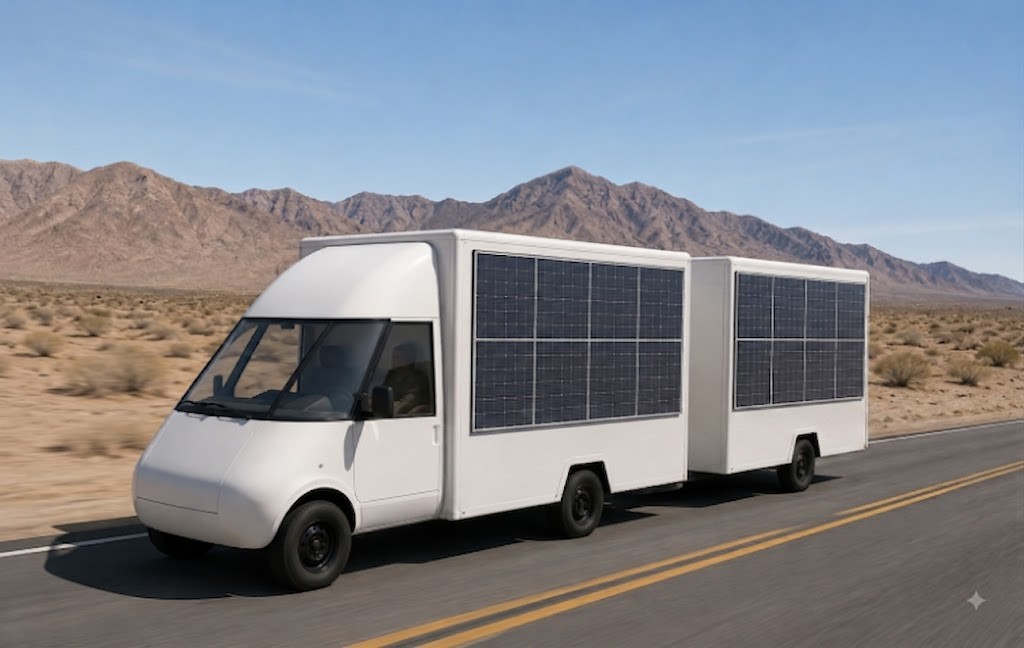
And then there is the magic of AI and the joy of student interns. This is what our intern Christian Percy cooked up using Gemini. It is not exactly right in the details, but it sure makes the dream more vivid.
Main Maxi Taxi page